Who Are We?
In this project, students explored how our vision of community can be shaped by studying organizations as minute as microscopic cells and by engaging in holistic discussions of metaphysics. They examined what makes us “who we are,” from the level of our cellular structure to our place in nature and within systems of belief.
Students studied world religions, cell development, and the circulatory system with the goal of creating games to share their knowledge and interests with others. Topics ranging from Hinduism, Islam, and Buddhism to B cells and T cells were transformed into creative learning tools such as tic-tac-toe boards and cube games.
To deepen their experiential learning, students visited the Red Cross, performed lab experiments testing blood types, and created presentations and infographics. They discussed whether religion makes people happier and reflected on George Bernard Shaw’s idea that “there is only one religion but many versions of it.” Walks through Tsugaike Nature Park and a hike to the historic Maki Village provided opportunities to connect with the natural world, local culture, and a deeper appreciation of their surroundings.
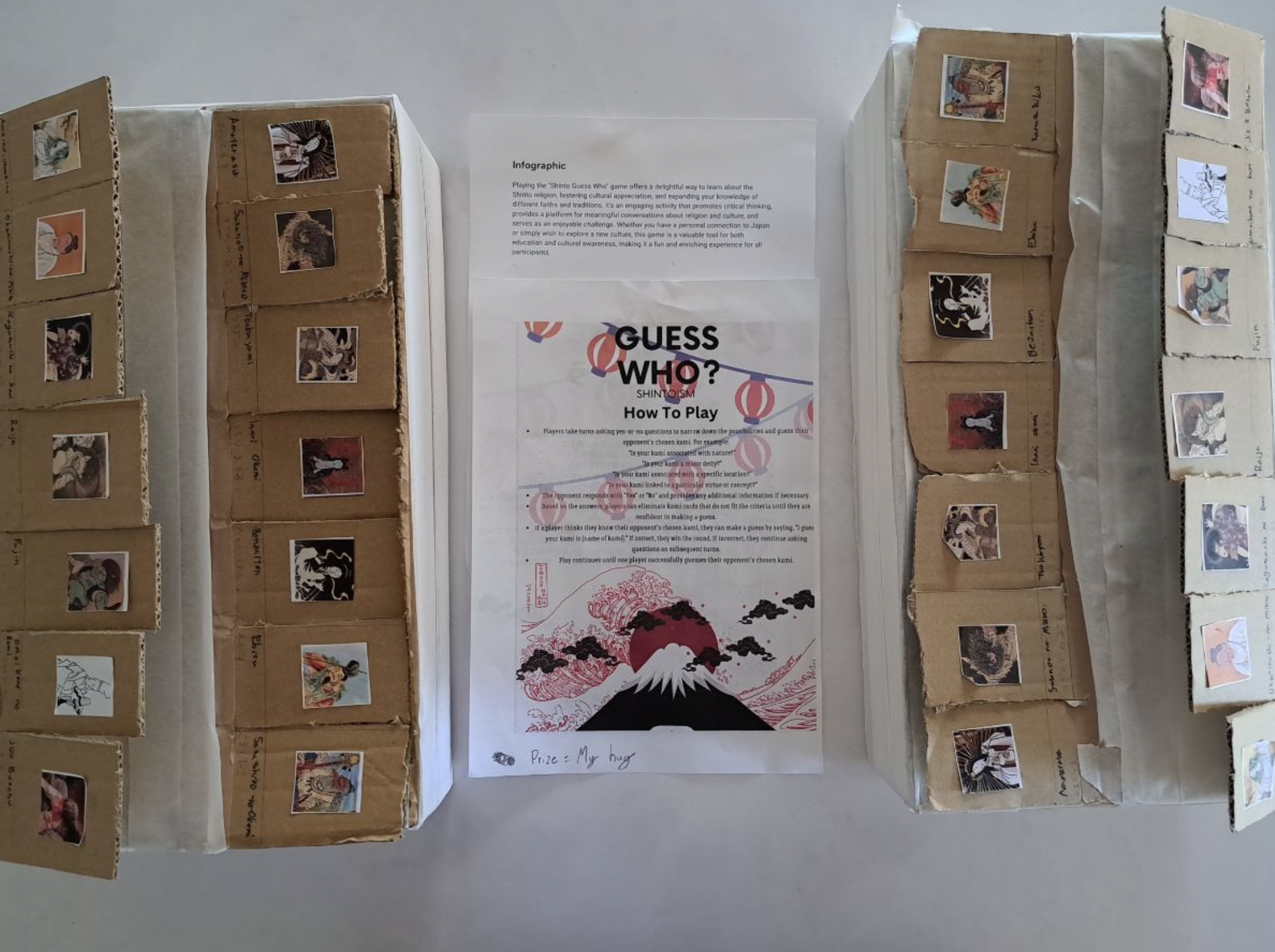
One of the games created by students in the "Who Are We?" project, using a board game format to teach about Shintoism.
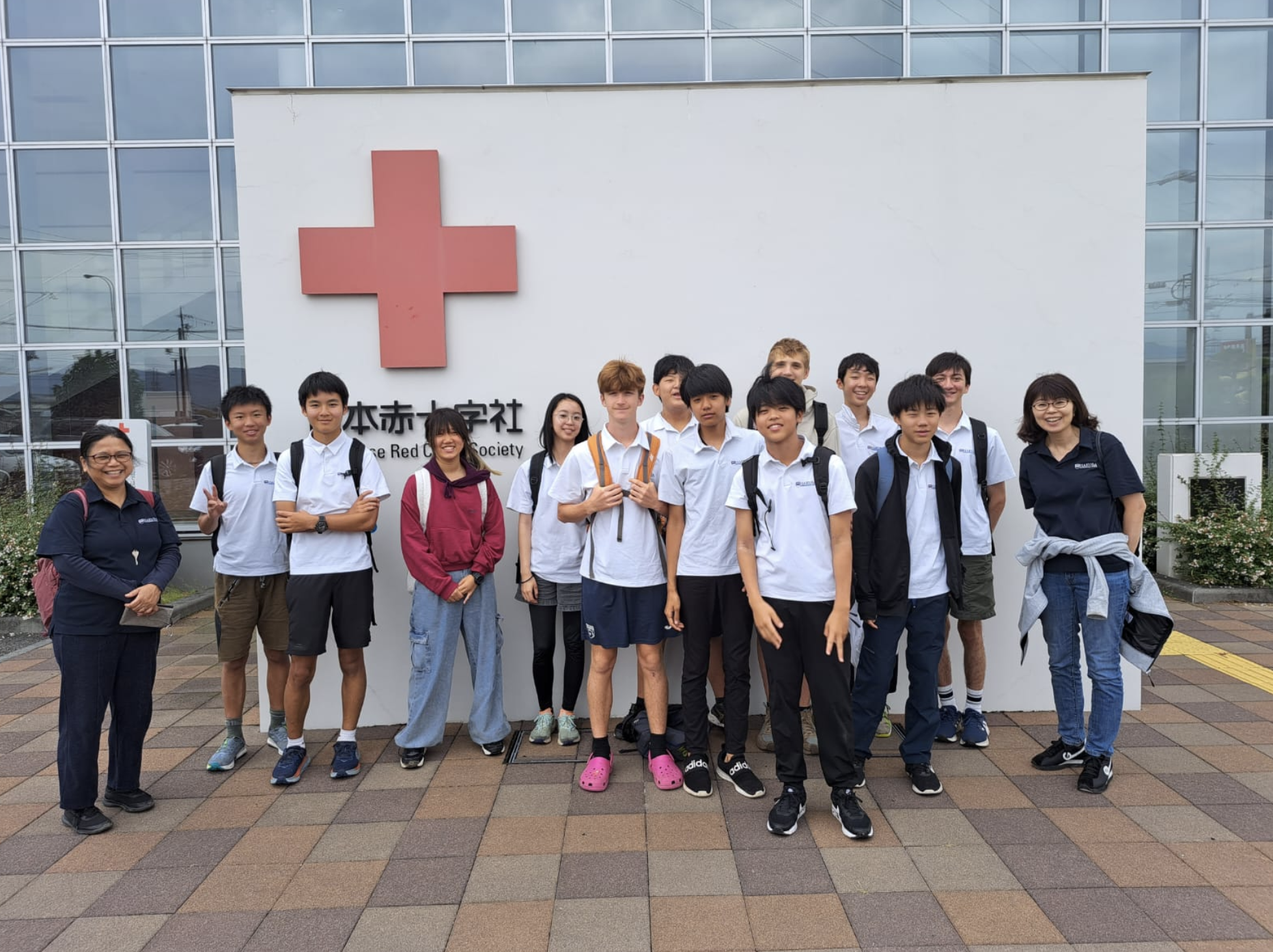
“Students in our “Who Are We?” project this week visited the Nagano Red Cross, where we learned about the latest research and capabilities for securing a blood supply for those in need.”